

If your pages load slowly or don’t work smoothly on phones, it’s common. Many website owners struggle with things like:
- Website loading slow on mobile
- High bounce rate due to slow website
- Website speed affecting ranking
- My website fails Core Web Vitals
- Website performance issues affecting sales, including crawling and indexing issues
- Mobile users leaving my website
These problems directly impact your traffic, leads, conversions, and revenue. That’s why Core Web Vitals optimization has become one of the most important parts of search engine optimization in 2026.
We help businesses improve their website design and development, speed, user experience, and Google performance through professional Core Web Vitals services and page speed optimization services.
What Are Core Web Vitals?
Core Web Vitals are a set of performance metrics that measure how users experience your website in real life.
They focus on three key areas:
- Largest Contentful Paint (LCP) – Loading Speed
Measures how quickly your main content loads.
👉 Ideal: Under 2.5 seconds
- Interaction to Next Paint (INP) – Responsiveness
Measures how fast your website reacts when users click or interact.
👉 Ideal: Under 200 milliseconds
- Cumulative Layout Shift (CLS) – Visual Stability
Measures how stable your page is (no jumping buttons or shifting text).
👉 Ideal: Below 0.1
Together, these define how fast, responsive, and stable your website feels.
Why Core Web Vitals Matter for Your Business
Google has confirmed that Core Web Vitals improvement affects:
- SEO rankings
- Organic traffic
- Conversions and sales
- Lead generation
- Mobile user experience
Slow websites annoy visitors and can make businesses lose money.
Core Web Vitals are part of Google’s page experience signals, which influence how your website ranks in search results.
However, here’s the important truth:
👉 Content relevance still matters more—but when content is equal, performance wins.
A fast, smooth website can:
- Rank higher
- Keep users engaged
- Increase trust and conversions
Slow websites result in:
- More users leaving your website
- Low conversions
- Drop in Google visibility
- Bad mobile experience
- Lower trust and sales
Fast websites earn more revenue. It’s that simple.
How Core Web Vitals Optimization Helps Your Business
At Star Media Brands, our website speed optimization and Core Web Vitals services help you:
✔ Improve Google PageSpeed score
Better score means higher ranking chances.
✔ Fix mobile speed issues
Essential, because most users browse on mobile.
✔ Reduce bounce rate
Fast load time keeps people on your site longer.
✔ Increase website conversions
Speed directly affects your lead and sales performance.
✔ Improve website sales with faster loading
Customers trust fast-loading sites more than slow ones.
✔ Speed optimization for lead generation
A fast website helps convert more visitors into inquiries.
✔ Mobile speed optimization for ecommerce
Faster checkout brings more orders.
What We Improve During Core Web Vitals Optimization
Our team optimizes every factor that affects your speed and score:
- Image compression and next-gen formats like WebP
- Server and hosting optimization
- Fixing unused JavaScript and CSS
- Reducing page size
- Improving caching
- Code cleanup
- Lazy loading
- CDN setup
- Mobile performance fixes
- Template and theme optimization
- Database cleanup
This ensures your site loads smoothly and meets Google’s expectations.
If your website loads slowly or doesn’t perform smoothly—especially on mobile—you’re not alone. Many businesses today struggle with issues like slow loading speed, high bounce rates, poor mobile experience, and declining rankings.
The reality? These problems directly impact your traffic, leads, conversions, and revenue.
That’s where Core Web Vitals come in. Introduced by Google, these metrics are now a critical part of SEO and user experience optimization in 2026.
Common Website Problems (And Why They Happen)
Many businesses face these issues:
- Website loading slow on mobile
- High bounce rate due to slow pages
- Poor Google rankings
- Failed Core Web Vitals scores
- Users leaving before interaction
These happen due to:
- Heavy images and unoptimized media
- Excessive JavaScript
- Poor hosting/server speed
- No caching or CDN
- Unoptimized themes and plugins
Impact of Slow Websites on Your Business
A slow website doesn’t just hurt SEO—it hurts revenue.
Slow Websites Lead To:
- ❌ Higher bounce rates
- ❌ Lower conversions
- ❌ Poor mobile experience
- ❌ Reduced trust
- ❌ Lower search visibility
Fast Websites Deliver:
- ✅ Better rankings
- ✅ Higher engagement
- ✅ More leads and sales
- ✅ Stronger brand credibility
Studies show even a 0.1-second improvement can significantly increase conversions.
Core Web Vitals Score Breakdown
Metric | Good | Needs Improvement | Poor |
LCP | ≤ 2.5s | 2.5–4s | > 4s |
INP | ≤ 200ms | 200–500ms | > 500ms |
CLS | ≤ 0.1 | 0.1–0.25 | > 0.25 |
How to Measure Core Web Vitals
You can track your performance using tools like:
- Google Search Console (Core Web Vitals report)
- PageSpeed Insights
- Chrome Lighthouse
- Real User Monitoring tools
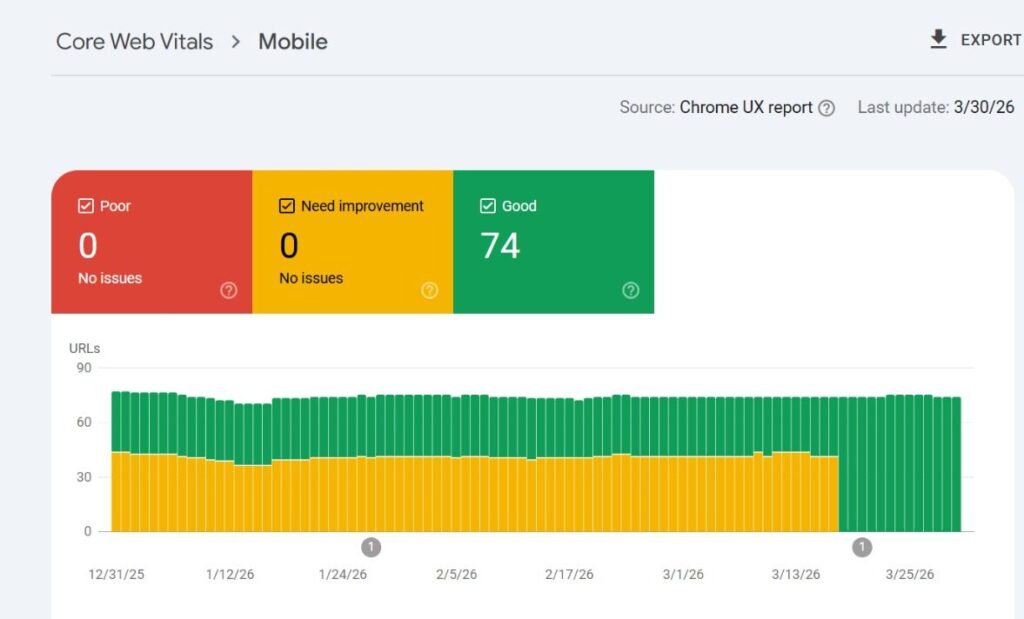
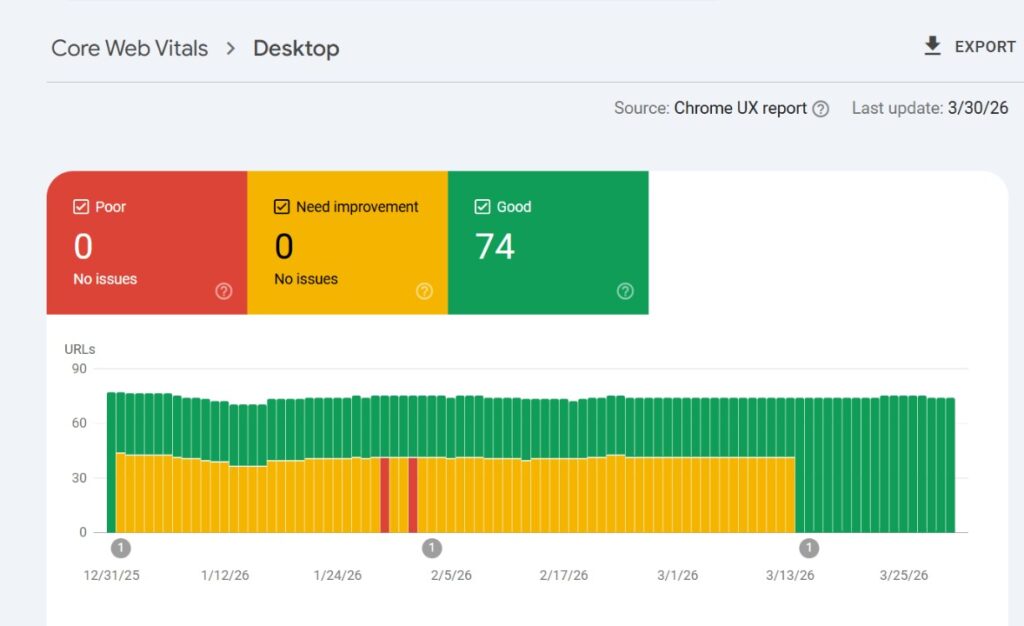
Understanding the Core Web Vitals Report
In Search Console, your performance is categorized as:
- Good
- Needs Improvement
- Poor
Key insights:
- Data is based on real user experience
- URLs are grouped by similar performance
- Only indexed pages are included
- Performance varies by country and network speed
If you see “No Data Available”, it may mean:
- Your site is new
- Not enough traffic yet
How to Improve Core Web Vitals
- Improve LCP (Loading Speed)
- Optimize images (use WebP format)
- Upgrade hosting/server
- Minify CSS & JavaScript
- Use CDN
- Defer non-essential scripts
- Improve INP (Responsiveness)
- Reduce JavaScript execution
- Break long tasks into smaller chunks
- Remove unnecessary third-party scripts
- Prioritize interactive elements
- Improve CLS (Visual Stability)
- Set image dimensions
- Reserve space for ads
- Avoid content shifting
- Use stable layouts
What We Optimize in Core Web Vitals Services
A professional optimization process includes:
- Image compression & next-gen formats
- Code cleanup (CSS, JS)
- Lazy loading implementation
- Server & hosting optimization
- CDN setup
- Database optimization
- Mobile performance fixes
- Theme/template optimization
How Core Web Vitals Optimization Helps Your Business
With proper optimization, you can:
✔ Improve PageSpeed score
✔ Fix mobile performance issues
✔ Reduce bounce rate
✔ Increase conversions
✔ Boost SEO rankings
✔ Improve user experience
The Bigger Picture: Core Web Vitals + SEO
Core Web Vitals are just one part of SEO. They work alongside:
- Mobile-friendliness
- HTTPS security
- Clean UI/UX
- Non-intrusive popups
👉 A fast website + great content = strong ranking advantage
Final Thoughts
Core Web Vitals optimization is no longer optional in 2026.
Your website speed directly impacts:
- Google rankings
- User experience
- Conversions & sales
- Brand trust
If your site is slow or struggling on mobile, it’s time to act.
Fast websites don’t just rank better—they earn more.
Get your Free Core Web Vitals Audit today!